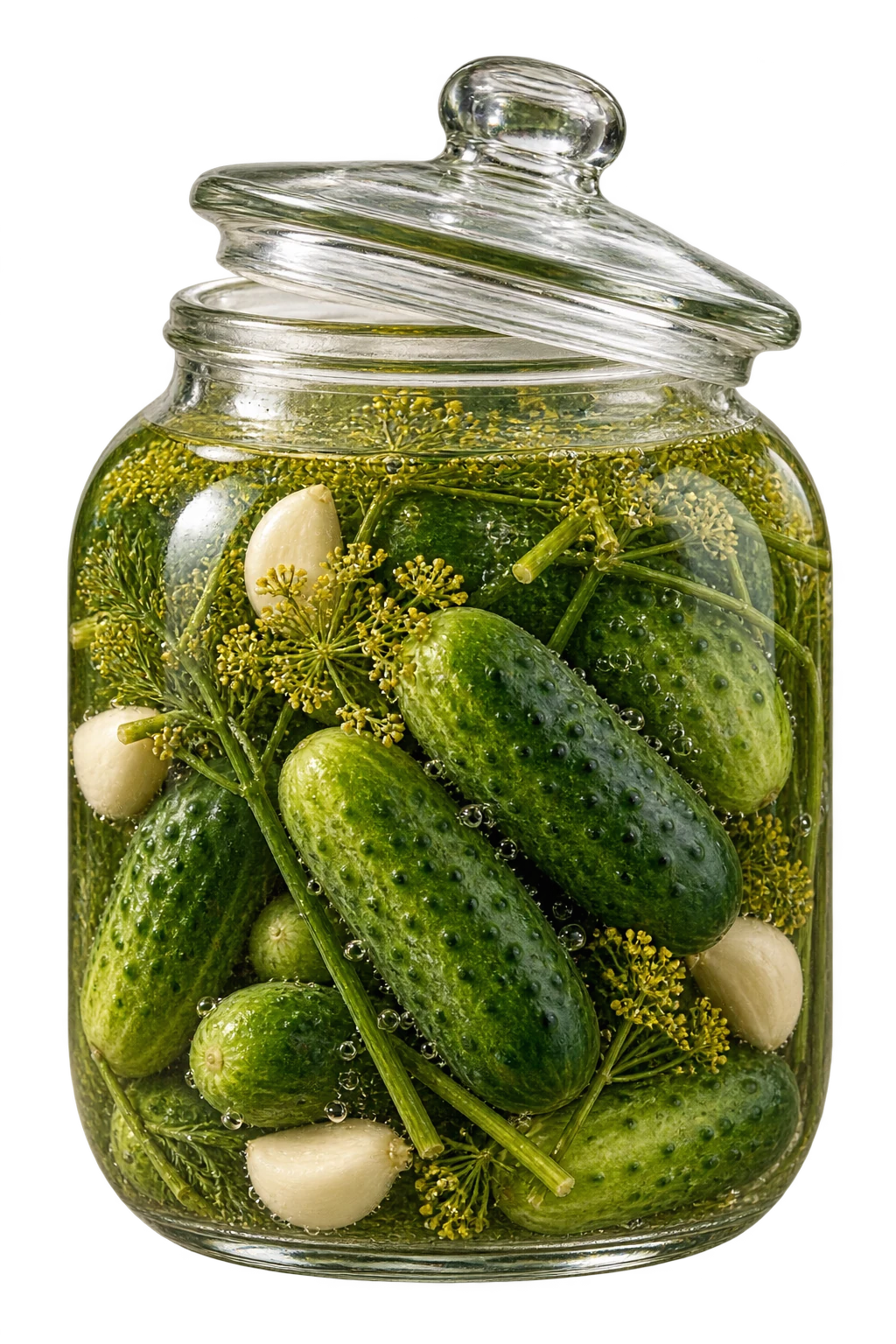
Choose firm cucumbers of a similar size for fermenting. Dill flower heads, garlic and horseradish flavour the brine. The sour taste develops through fermentation in brine, without added vinegar.
Recipes / Vegetables
Fermented dill pickles
Cucumbers fermented with dill, garlic and horseradish, from Anna’s recipe at AniaGotuje.pl.
Instructions
Download printable PDFRecipe card to download and print
0 / 4 steps completed
Choose the ingredients
Choose fresh, small, firm cucumbers without blemishes. Gather the garlic, dill, horseradish and any optional leaves.
Pack the jars
Wash the cucumbers and flavourings. Cut the horseradish into strips. Separate the garlic cloves, leaving the skins on. Scald the jars and lids. Divide the flavourings between the 4 jars and pack the cucumbers tightly, standing them upright.
Add the brine
Bring 2 litres water to the boil and dissolve the 4 level tbsp salt in it. Pour over the cucumbers to cover them. Gently move the jars to release trapped air. The author usually uses 500 ml brine per jar. Close the lids tightly and leave for 3 days at about 20°C.
Move to a cool place
After 3 days, move to a cool pantry or cellar. Ferment for about 14 days, with a maximum of 20 days. The author allows cooled brine as an alternative and treats turning the jars upside down while cooling as optional.
Tips
NCHFP/USDA advises discarding pickles that become soft or slimy or develop a foul smell; do not taste them. As a separate editorial precaution, Fermentarnia recommends discarding the entire batch if mould appears.
Storage
After 3 days at about 20°C, move to a cool pantry or cellar. The author recommends the fridge if the house is warm and there is no cool cellar.
How to serve
Serve with sandwiches or a meal, or use in Polish cucumber soup and vegetable salad.
Recipe sources
- Anna / AniaGotuje.pl · Fermented Cucumbers — original recipe
- Anna / AniaGotuje.pl · About the author
- NCHFP / USDA · Independent guidance on signs of spoilage
This recipe is based on the sources listed above.
What will you make next?
 01
Vegetables
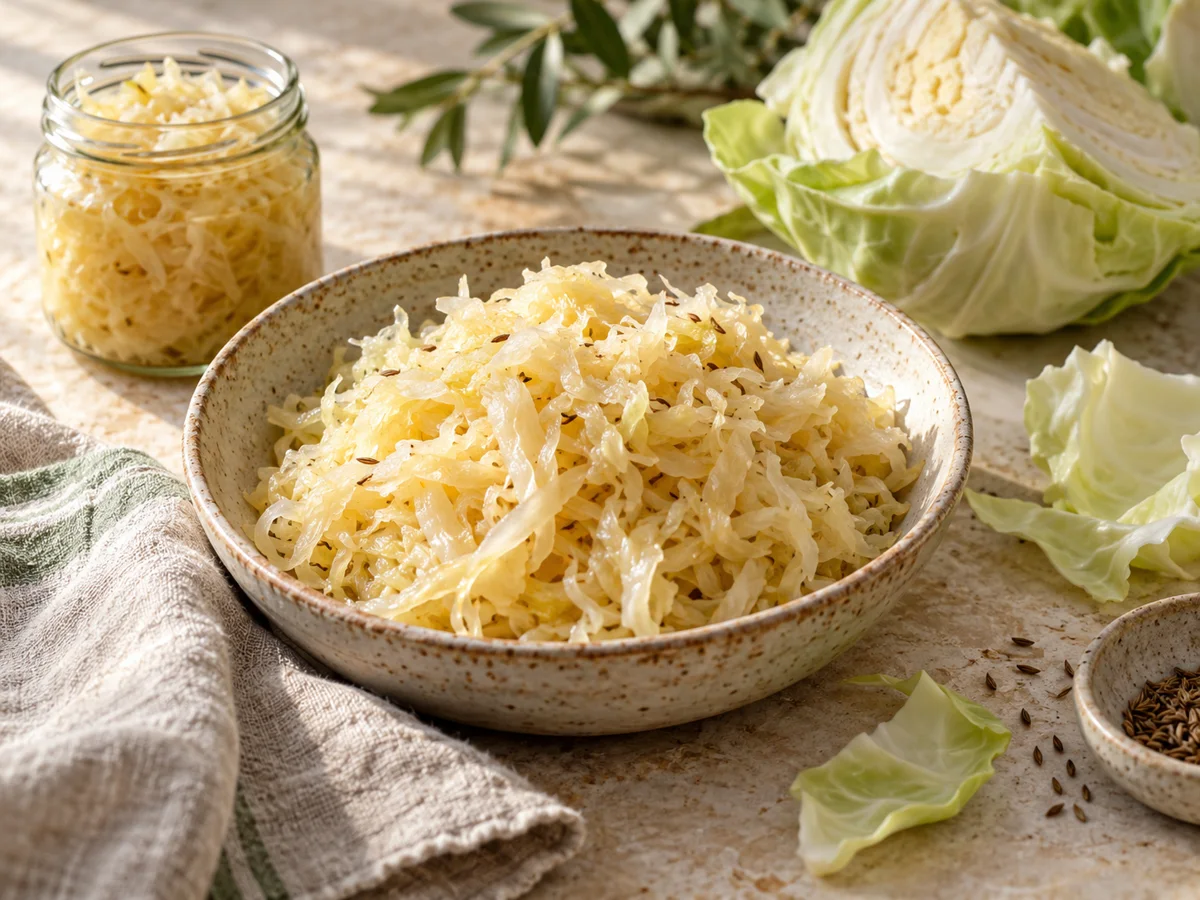
Ania’s sauerkraut
Homemade sauerkraut fermented in jars, following Anna’s recipe from AniaGotuje.pl.
30 minutes prep + 7–14 days fermenting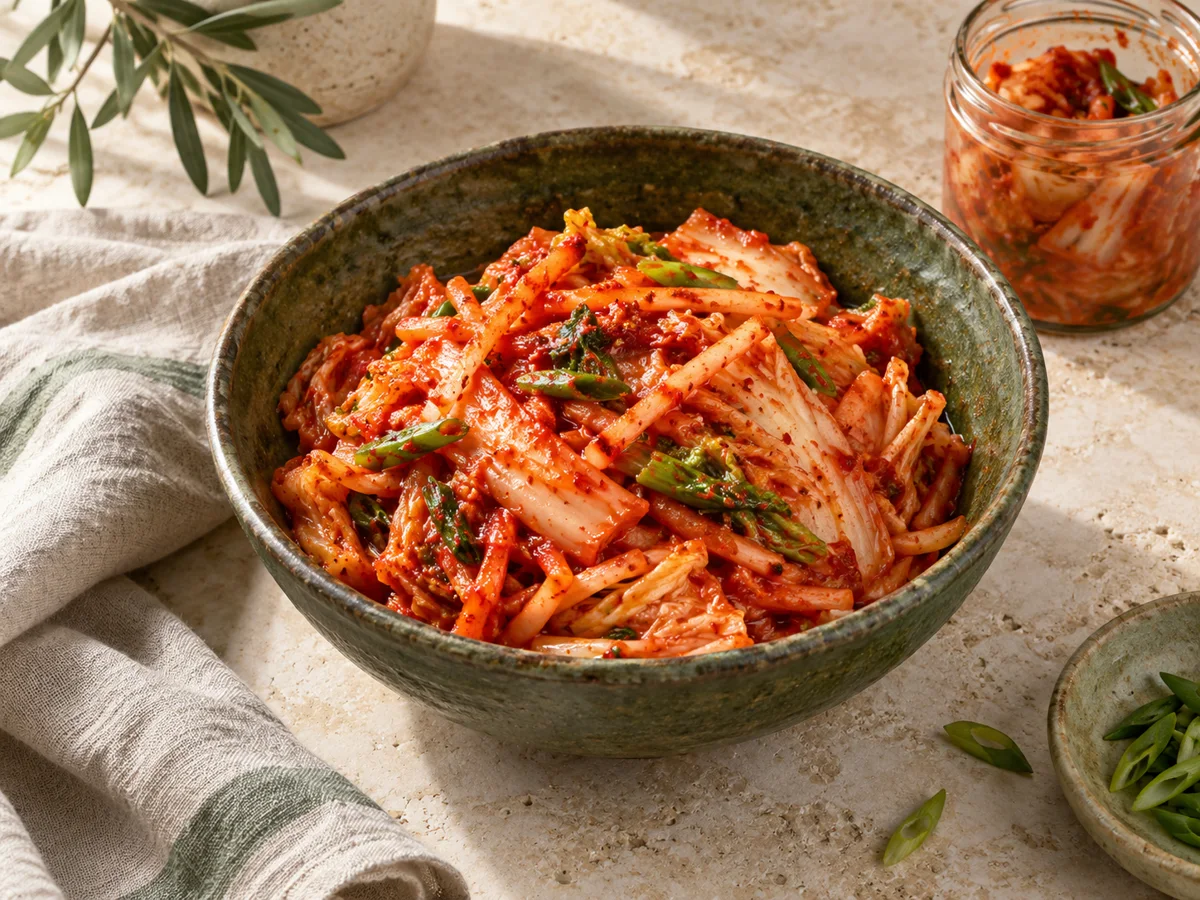 02
Vegetables
Sue Pressey’s napa cabbage kimchi
Traditional cabbage kimchi (pogi-kimchi) made with napa cabbage quarters, radish, Korean chilli flakes, fish sauce and salted fermented shrimp. From Sue Pressey’s recipe at My Korean Kitchen.
2 hours 30 minutes prep + 6 hours salting (8 hours 30 minutes total), then 24 hours fermenting + 3–4 days chilling for fuller flavour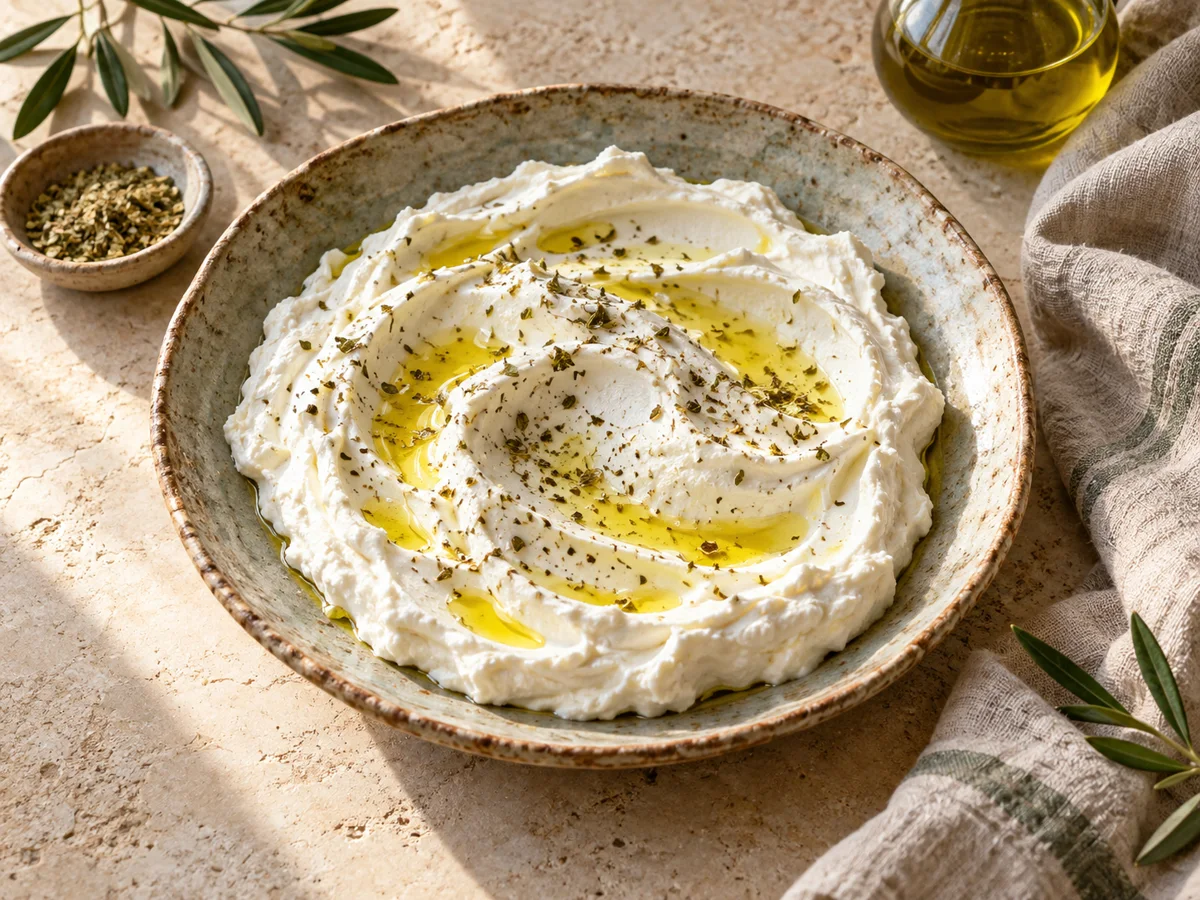 04
Dairy
Labneh — creamy strained yoghurt
Thick, creamy strained yoghurt, from Victoria Prever’s recipe for Good Food. Serve with a drizzle of olive oil and a sprinkling of za’atar.
10 minutes preparation + 12–24 hours straining