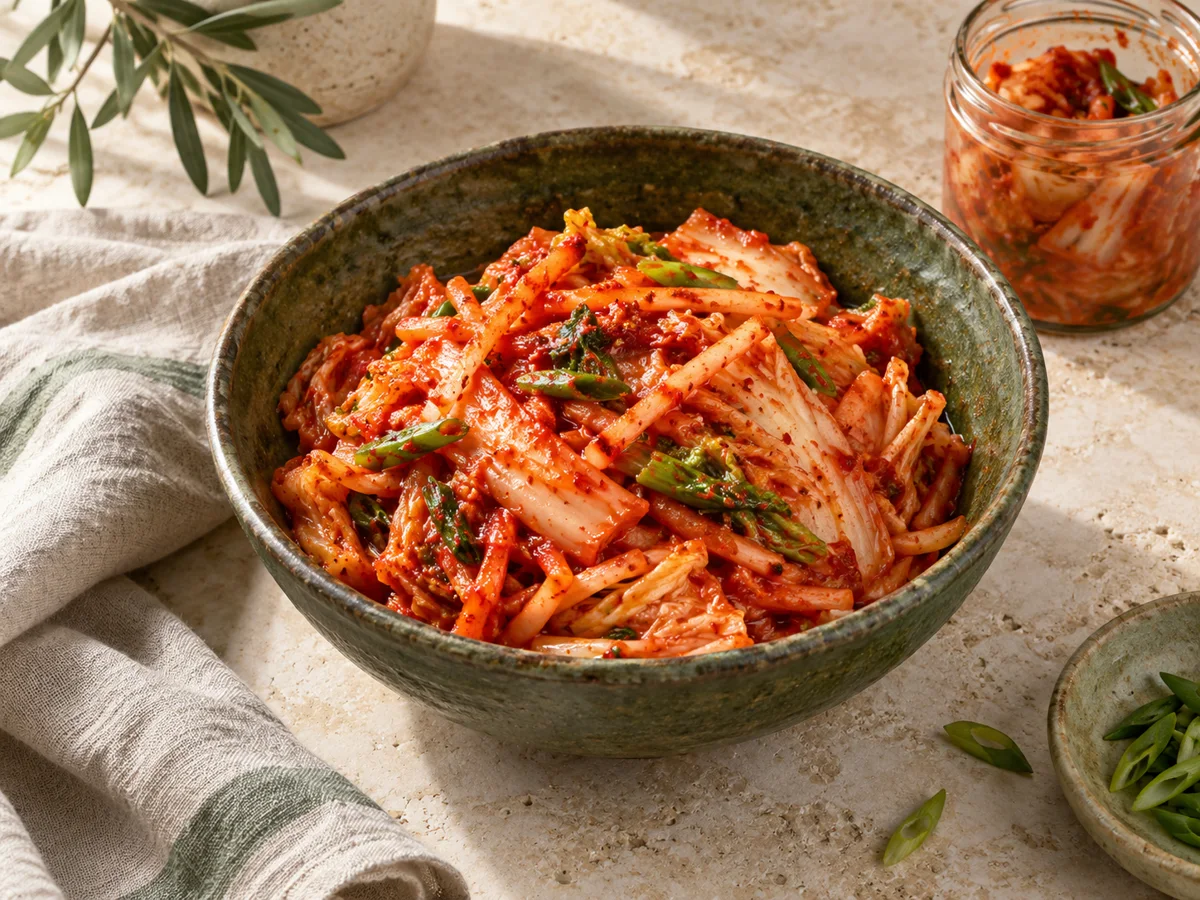
Kimchi includes many kinds of seasoned, fermented vegetables. Baechu-kimchi is made with napa cabbage. In pogi-kimchi, the leaves remain attached to the core: after salting, they are coated with a paste of gochugaru, garlic and other seasonings.
Recipes / Vegetables
Sue Pressey’s napa cabbage kimchi
Traditional cabbage kimchi (pogi-kimchi) made with napa cabbage quarters, radish, Korean chilli flakes, fish sauce and salted fermented shrimp. From Sue Pressey’s recipe at My Korean Kitchen.
Instructions
Download printable PDFRecipe card to download and print
0 / 9 steps completed
Quarter the cabbage
Cut the cabbage lengthways into quarters and rinse under running water. Keep the leaves attached to the core.
Salt the leaves
Dissolve the coarse salt in the 3840 ml water. Dip each cabbage quarter in this brine and place on a tray. Sprinkle the 97 g salt between the leaves, concentrating on the thick white parts. Keep the brine.
Leave to salt
Put the cabbage in a food-grade bag or bucket, with the wedge sides facing up, and pour in the reserved brine. Seal the bag, or place a weight over the cabbage in the bucket. Leave for 6 hours, turning every 2 hours.
Rinse and drain
Rinse off the salt under running water, paying particular attention to the thick white parts of the leaves. Drain in a colander for 1 hour.
Make the rice paste
Cook the rice flour with the 360 ml water over a medium heat for 5–8 minutes, until thickened. Allow to cool, then stir in the gochugaru.
Mix the seasoning
Combine the radish, fine salt, fish sauce and saeujeot. Leave for 10 minutes, then mix in the remaining seasoning ingredients and rice paste.
Coat the leaves
Place a cabbage quarter on a tray and spread the seasoning over one side of every leaf. Use 1–2 small handfuls of paste per quarter, keeping the leaves attached to the core.
Ferment and chill
Pack into a kimchi container or an airtight container with a lid, filling it only 70–80% full. Close and leave at room temperature for 24 hours, then refrigerate. Check the pH before eating, as explained below. Serve once chilled and at pH 4.6 or lower, or wait a further 3–4 days for a fuller flavour.
Cut as needed
Cut a small portion and keep it in a smaller glass container for serving. Leave the rest in quarters in the larger container, cutting more as needed.
Tips
Contains fish and crustaceans from the fish sauce and saeujeot.
Additional Colorado State University guidance: before eating, verify that the kimchi has reached pH 4.6 or lower. Fermentation time and chilling alone do not confirm this value. Discard the entire batch if mould appears.
Storage
After 24 hours, refrigerate, ideally at 3–5°C. Keep tightly covered and use clean utensils to serve.
How to serve
Cut into bite-sized pieces and serve with rice. Use more mature, sour kimchi in fried rice, kimchi-jjigae stew or kimchijeon pancakes.
Recipe sources
- Sue Pressey · My Korean Kitchen · Kimchi Recipe — original recipe
- Colorado State University · Independent kimchi safety guidance
This recipe is based on the sources listed above.
What will you make next?
 01
Vegetables
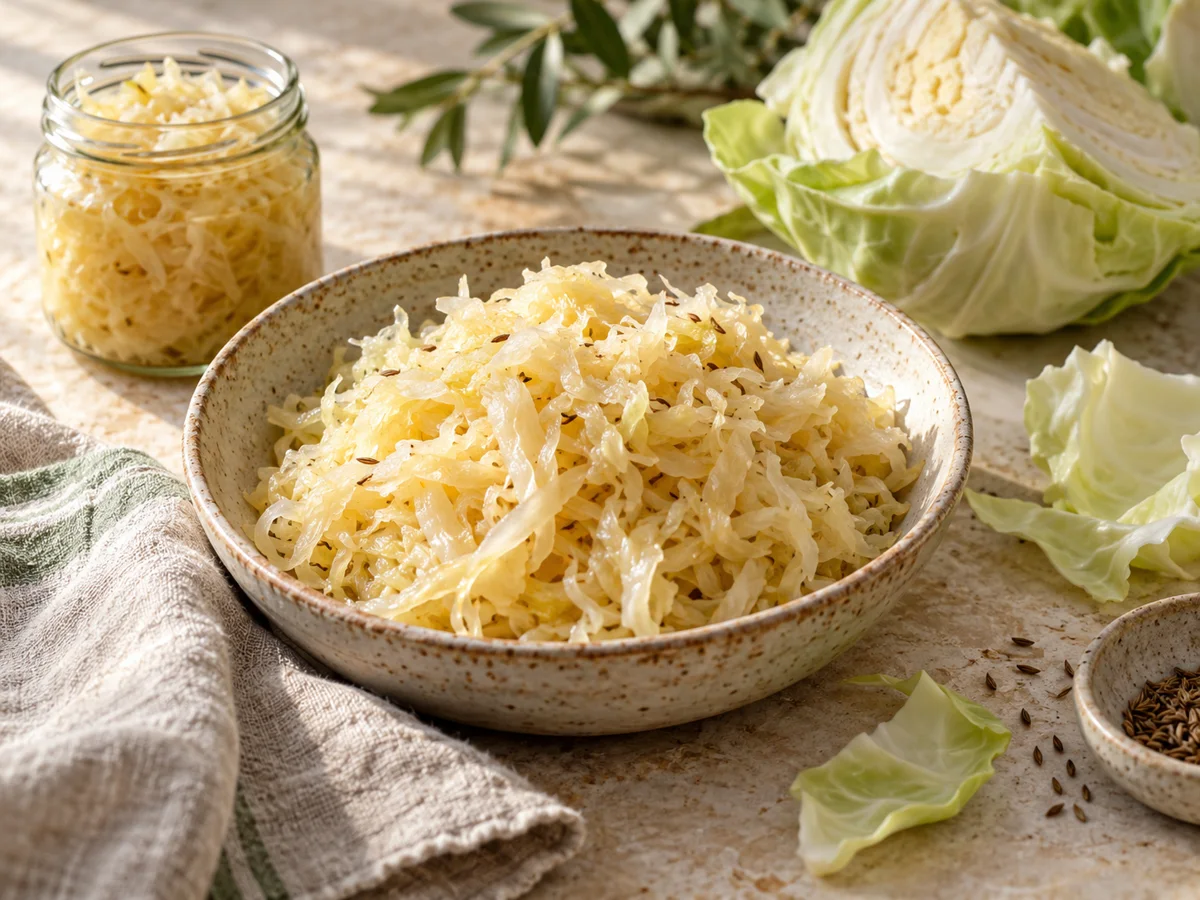
Ania’s sauerkraut
Homemade sauerkraut fermented in jars, following Anna’s recipe from AniaGotuje.pl.
30 minutes prep + 7–14 days fermenting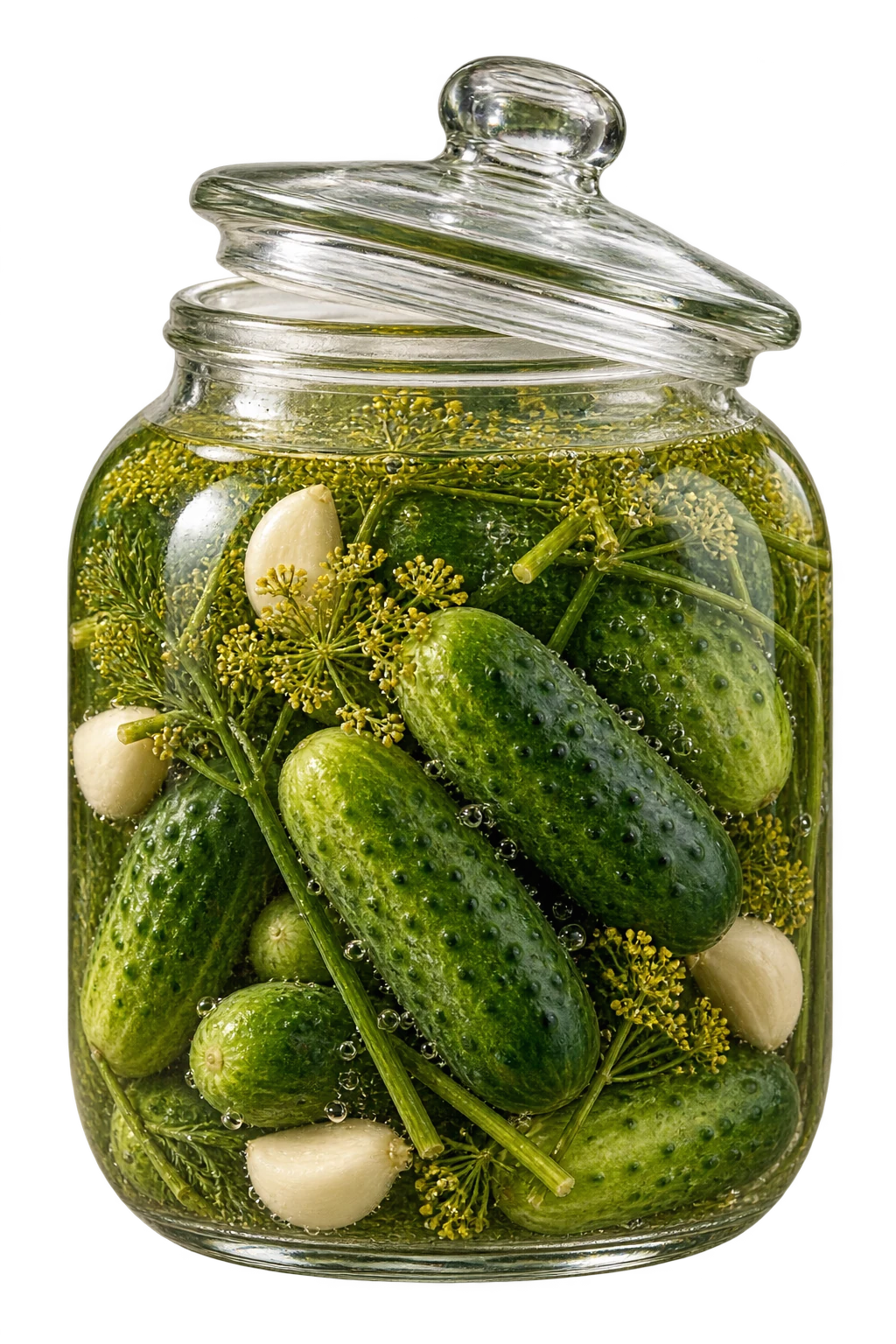 03
Vegetables
Fermented dill pickles
Cucumbers fermented with dill, garlic and horseradish, from Anna’s recipe at AniaGotuje.pl.
30 minutes prep + about 14 days fermenting (up to 20 days)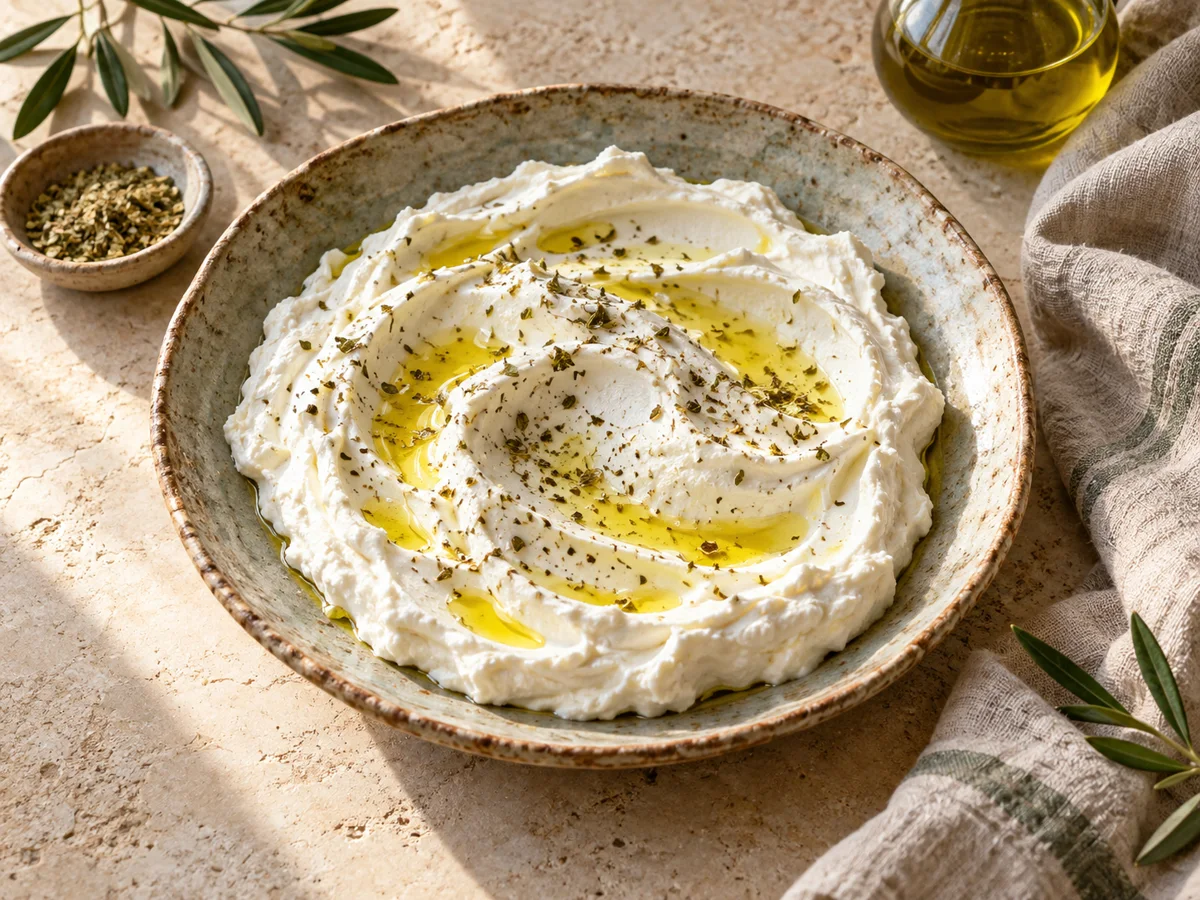 04
Dairy
Labneh — creamy strained yoghurt
Thick, creamy strained yoghurt, from Victoria Prever’s recipe for Good Food. Serve with a drizzle of olive oil and a sprinkling of za’atar.
10 minutes preparation + 12–24 hours straining