The fermentation lab.
Small cucumber. Big science.
Look beneath the brine. Explore what bubbles tell us, calculate salt and learn to ask a jar good questions.
 With Natalia Horbach, PhDMicrobiology · teaching
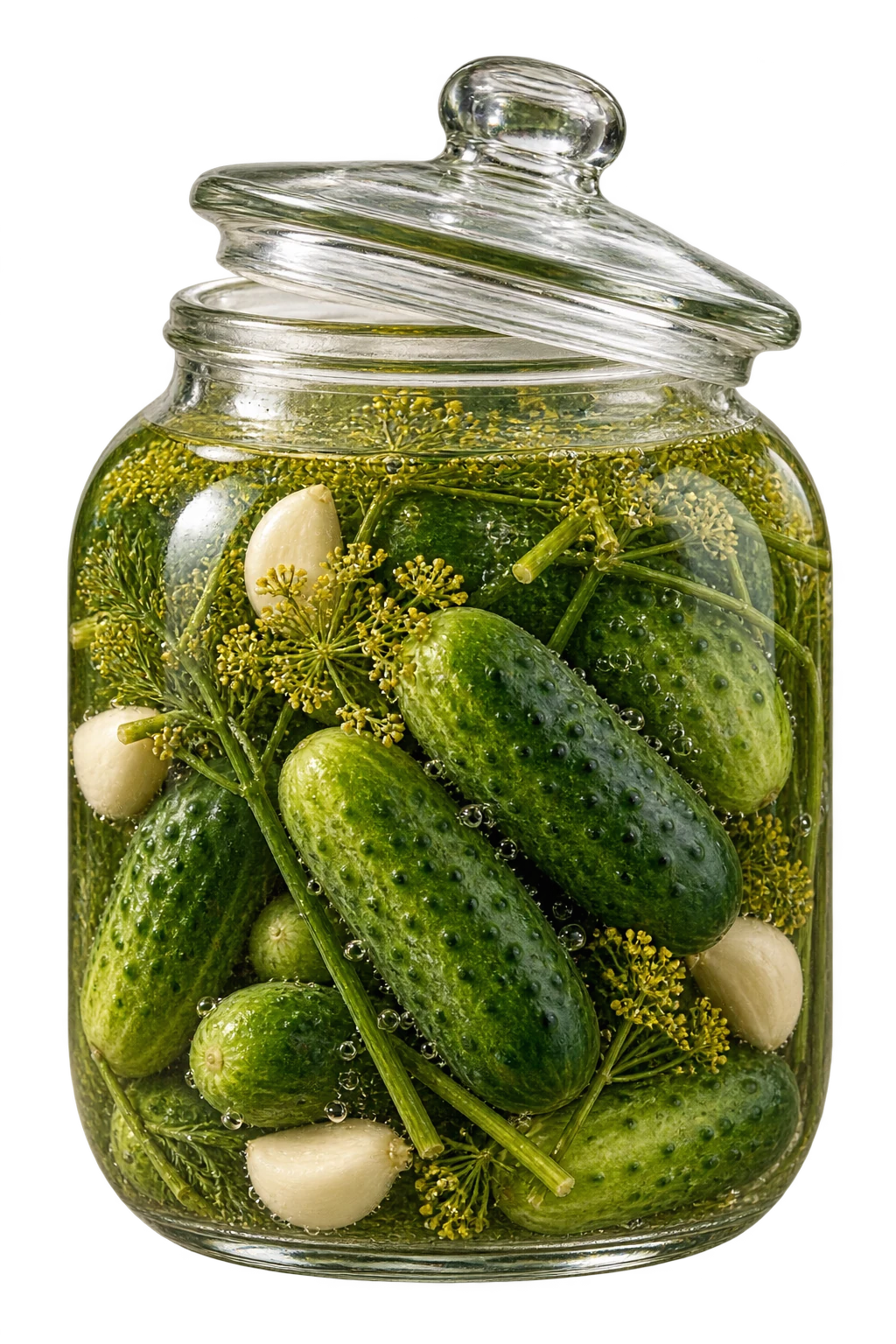 01 / bubbles02 / pHCUCUMBER UNDER THE LENS
Cucumber under the magnifying glass
Bacteria transform cucumber sugars into lactic acid, the main source of the tang in lacto-fermented cucumbers. Pickling with added vinegar follows a different process. Explore the chemistry inside the jar.
Glucose → 2 molecules of lactic acid. This is a simplified homofermentative pathway. Other bacterial pathways can also produce carbon dioxide, acetic acid or ethanol.
Undissociated lactic acid
Lactate
Educational model of one HA/A⁻ pair: lactic acid/lactate, with pKₐ ≈ 3.86 in water at 25°C. It ignores ionic strength and real brine buffering. Chemical-form proportions do not measure acid concentration, fermentation progress or food safety.
Sugars feed the bacteria
Cucumber glucose and fructose provide substrates for lactic acid bacteria. Sugar consumption and acid formation change the flavour; the microorganisms and conditions determine which fermentation products form.
pH is not acid quantity
Two brines can have similar pH values and different acid contents. Naturally occurring buffers resist pH changes, so pH cannot be converted directly into acid concentration.
Salt shapes the environment
Salt influences microbial growth and cucumber texture. Follow a tested recipe’s proportions. This model does not calculate salt quantities or brine acidification.
Crunch and pectin
Pectins help hold plant cells together. Enzymatic breakdown can soften cucumbers, while calcium can crosslink pectin chains. Freshness of the cucumbers and processing conditions also matter.
Laboratory studies record time, temperature and pH measured with a calibrated meter. Titration measures titratable acidity; HPLC quantifies individual acids and sugars. pH alone does not identify bacteria.
Sources and further reading
What is happening in the jar?
Discover three clues. Select the markers beside the jar to explore what a single observation can really tell us.
Your first clue?
Choose bubbles, pH or notes. Each marker opens another part of the story.
Interactive educational illustration. It does not show measurements or the rate of a real fermentation.
Two percent… of what?
Vegetables, water or finished brine? The same number can mean a different calculation. Try it here with the percentage specified by your recipe.
Understand the calculation step by stepSalt calculator: define the basis first
Enter the percentage specified by a tested recipe. This is arithmetic: the calculator does not select a safe concentration or validate a process.
salt = vegetable mass × percentage / 100
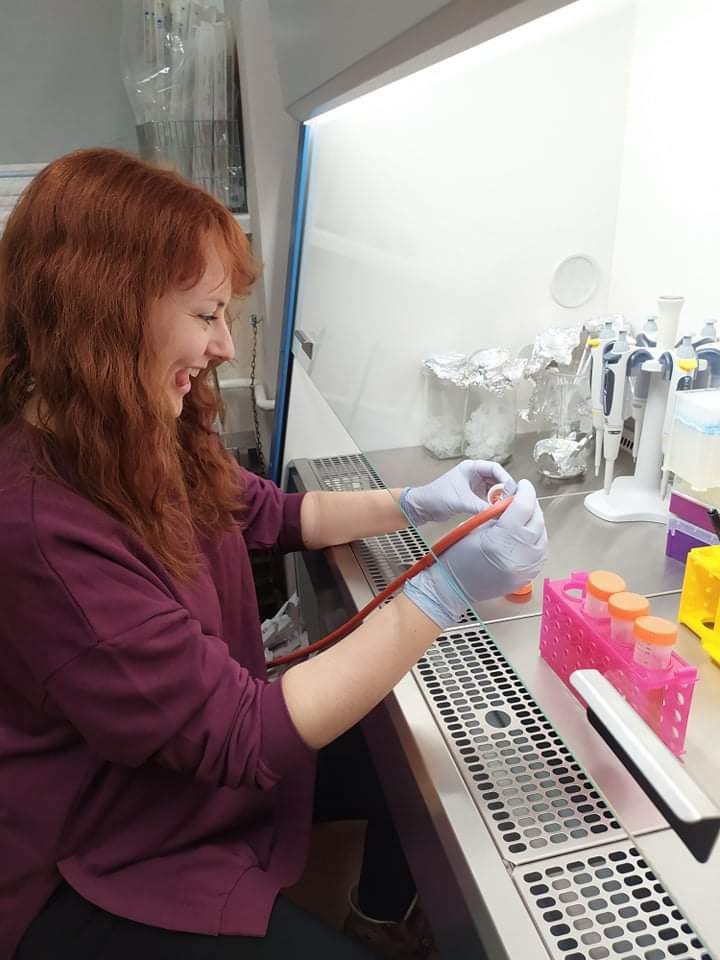 From my laboratory experience
Hello, I’m Natalia.Natalia Horbach, PhD
I am a doctor of chemical sciences, a food technologist and a university lecturer. I earned my doctorate at Wrocław University of Science and Technology. I teach microbiology and food chemistry and support businesses in food safety.
Fermentarnia brings together my interest in microorganisms, food and learning through experience. I want to show how curiosity becomes a good question and a careful observation.
- Chemical sciences · doctorate at PWr
- Food technology and safety
- Microbiology · teaching
Three notes from the lab.
pH in fermentation: what does the number say?
Sour taste, a meter reading and acid content are related. They are not three names for the same thing.
Read the guideHow do you calculate salt for fermentation?
“Two percent” sounds precise. Until we ask: two percent of what?
Read the guideHow to keep a fermentation journal
Memory likes shortcuts. A journal preserves details that can later become essential.
Read the guideBefore you open another jar…
Is this an operating laboratory?
Today this is an open online learning lab with educational resources and tools. A physical laboratory remains a future direction for Fermentarnia.
Does the calculator choose salt levels for every food?
It calculates the percentage you enter using your selected basis. Both the percentage and its basis must come from a tested recipe appropriate for the product.
Can these resources be used in class?
Yes, you can read the guides and print the observation sheet. Adapt tasks to the group’s level and your teaching laboratory’s safety rules.
A question that deserves a jar of its own?
Explore collaboration ideas or take an observation sheet to class. Good science welcomes the next question.