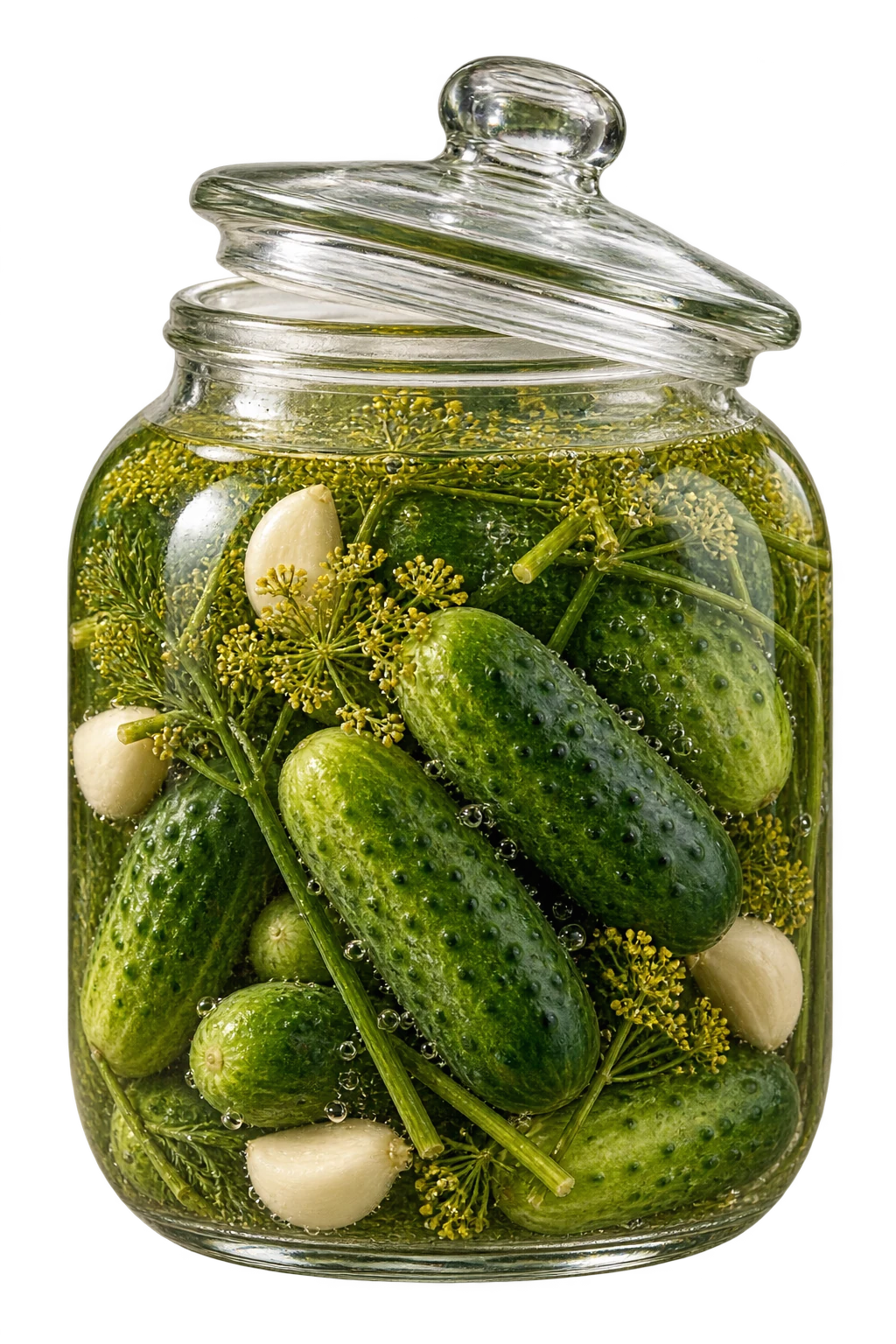
Bacteria that transform flavour
Vegetable fermentation relies on lactic acid fermentation. Bacteria use the sugars in the raw ingredients to produce organic acids, primarily lactic acid. As acidity increases, the pH falls and the flavour of the vegetables and brine changes. Some of these transformations also release carbon dioxide, which appears as bubbles.
Fermentation versus pickling in vinegar
A sour cucumber is not necessarily a fermented one. When pickling in vinegar, we add the acid from an external source. During fermentation, microorganisms produce it. A similar flavour can therefore have a very different story behind it.
Why do salt, temperature and time matter?
Salt shapes the conditions within the vegetables and brine. Its quantity matters to the process, as do temperature and limited exposure to oxygen. Vegetables should remain submerged in the brine. Fermentation time depends on the ingredients and conditions, so the calendar alone cannot describe the whole process.
For home fermentation, choose reliable, tested recipes and follow the stated proportions. A single bubble or a sour smell is no substitute for controlling the process.
From curiosity to experience
At Fermentarnia, I want to connect observations in the kitchen with the question: why? A good starting point for a fermentation journal is to record the ingredients, recipe, date and temperature. This gives later observations context and turns a jar into a starting point for learning.