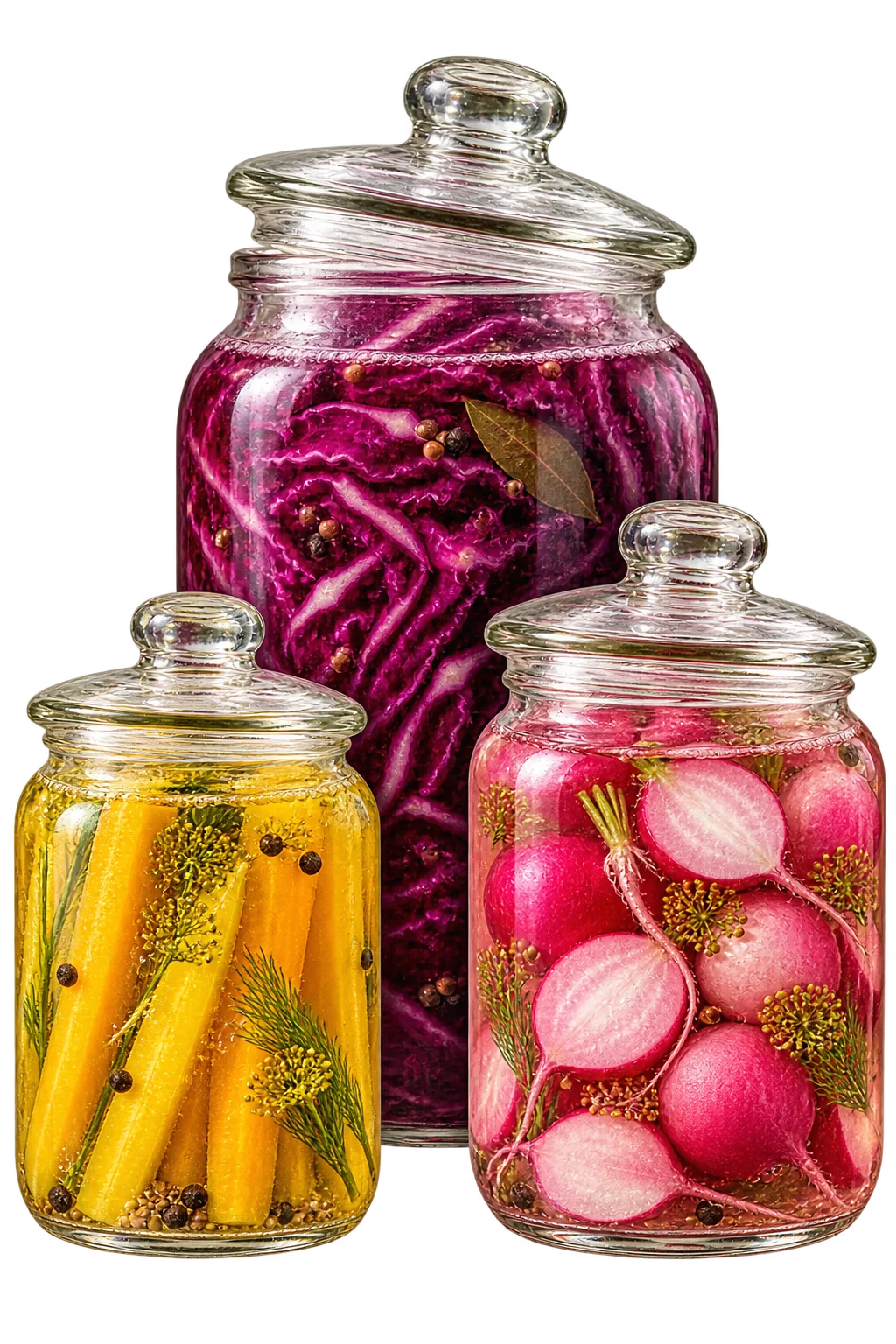
Kimchi comes in many forms
Kimchi does not have to mean spicy napa cabbage. Dongchimi, a radish variety with a watery brine, is one example. Studies of its fermentation have tracked a changing bacterial community alongside changes in sugars and acids. Flavour therefore develops through transformation, as well as through the initial seasoning of the vegetables.
Temperature changes the community
Lactic acid bacteria play an important part in kimchi fermentation, but their relative abundance does not stay constant. Studies comparing different temperatures found changes in both microbial composition and metabolic products. A similar pH therefore does not necessarily mean an identical fermentation process or the same aroma.
What does cabbage colour tell us?
Red cabbage contains anthocyanins whose colour depends partly on pH and the mixture of pigments present. Fermentation and storage can also change their amounts and profiles. A pink or purple shade offers an interesting glimpse of plant chemistry, but cannot by itself confirm that the whole batch has acidified correctly.
Give curiosity useful reference points
Salt affects the conditions for bacterial growth and the texture of fermented vegetables. Proportions should not be freely transferred between different products. When comparing observations, record the vegetable, temperature, time and method of pH measurement. To prepare a particular ferment, choose a tested method developed for that product.
Explore the sources
- Jung et al.: the kimchi metagenome (2011)
- Jeong et al.: dongchimi microbes and metabolites (2013)
- Jung et al.: temperature in kimchi fermentation (2024)
- Ahmadiani et al.: red cabbage anthocyanins and colour (2014)
- Wiczkowski et al.: cabbage anthocyanins during fermentation (2015)
- National Center for Home Food Preservation: fermentation principles
- Study of Leuconostoc starter cultures in kimchi (2025)