What do yeasts do with sugar?
Glucose and fructose are important sugars in grape juice. During alcoholic fermentation, yeasts, mainly of the genus Saccharomyces, turn them into ethanol and carbon dioxide. This is a series of biochemical reactions through which cells obtain energy.
Where do the bubbles come from?
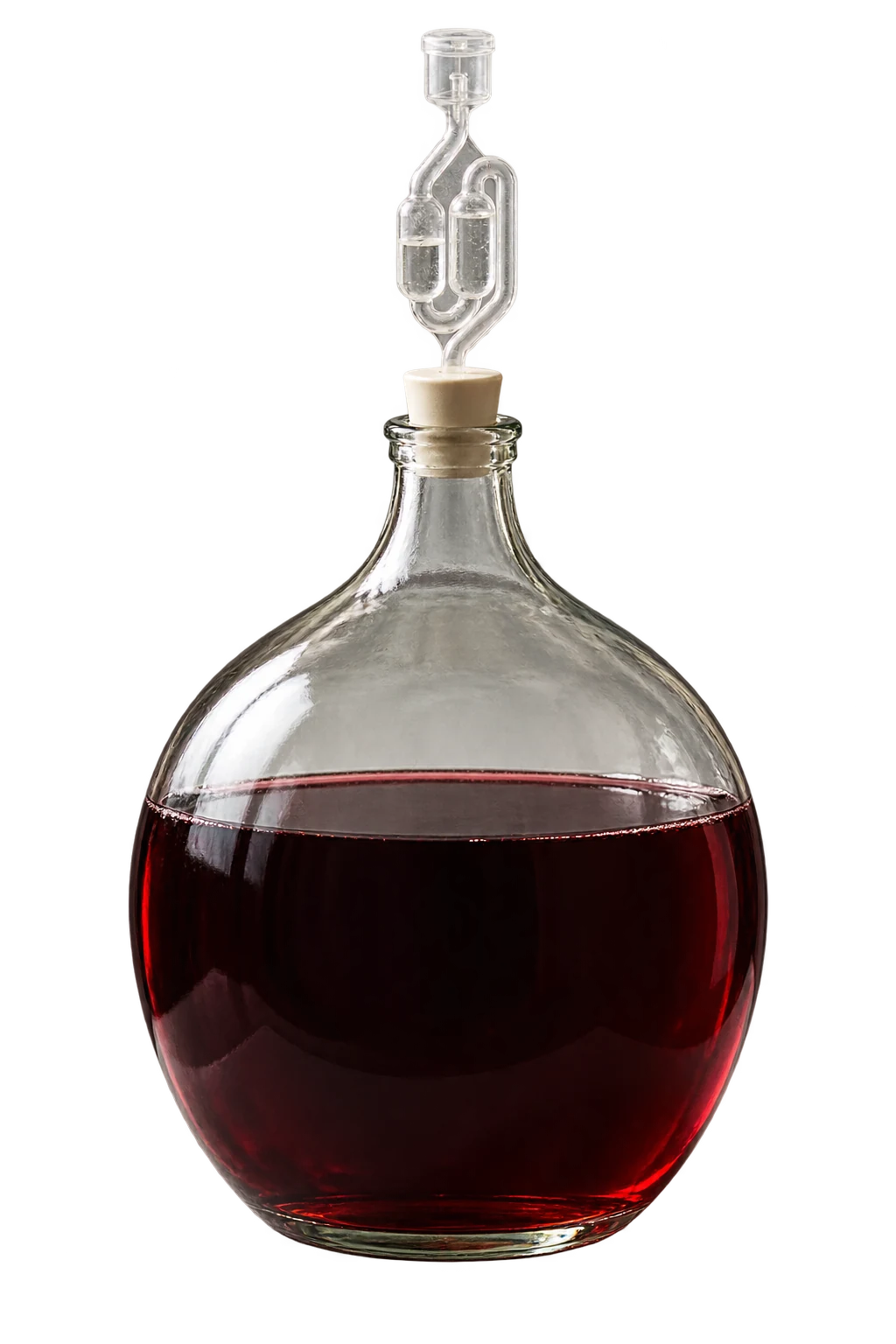
The carbon dioxide released can escape through an airlock. The visible activity can be striking, but the process is primarily about the transformation of sugars. Understanding it means looking beyond the movement of gas alone.
Conditions matter
Successful fermentation requires an active yeast population and an environment that allows it to work. Chemical, physical and biological conditions influence how sugars are used. Managing the process also means understanding the raw material, monitoring changes and responding to problems.
Yeasts also help produce compounds that influence the flavour and aroma of wine. Two fermentations starting with similar juice may therefore lead to different results.
From vineyard to laboratory
Winemaking is one of the directions in which Fermentarnia is developing. I am interested in the dialogue between a producer’s practical experience and scientific knowledge of microorganisms and product composition. How do we ask good questions? How do we describe experiments? How do we interpret results? These are the questions around which I want to build a future laboratory.