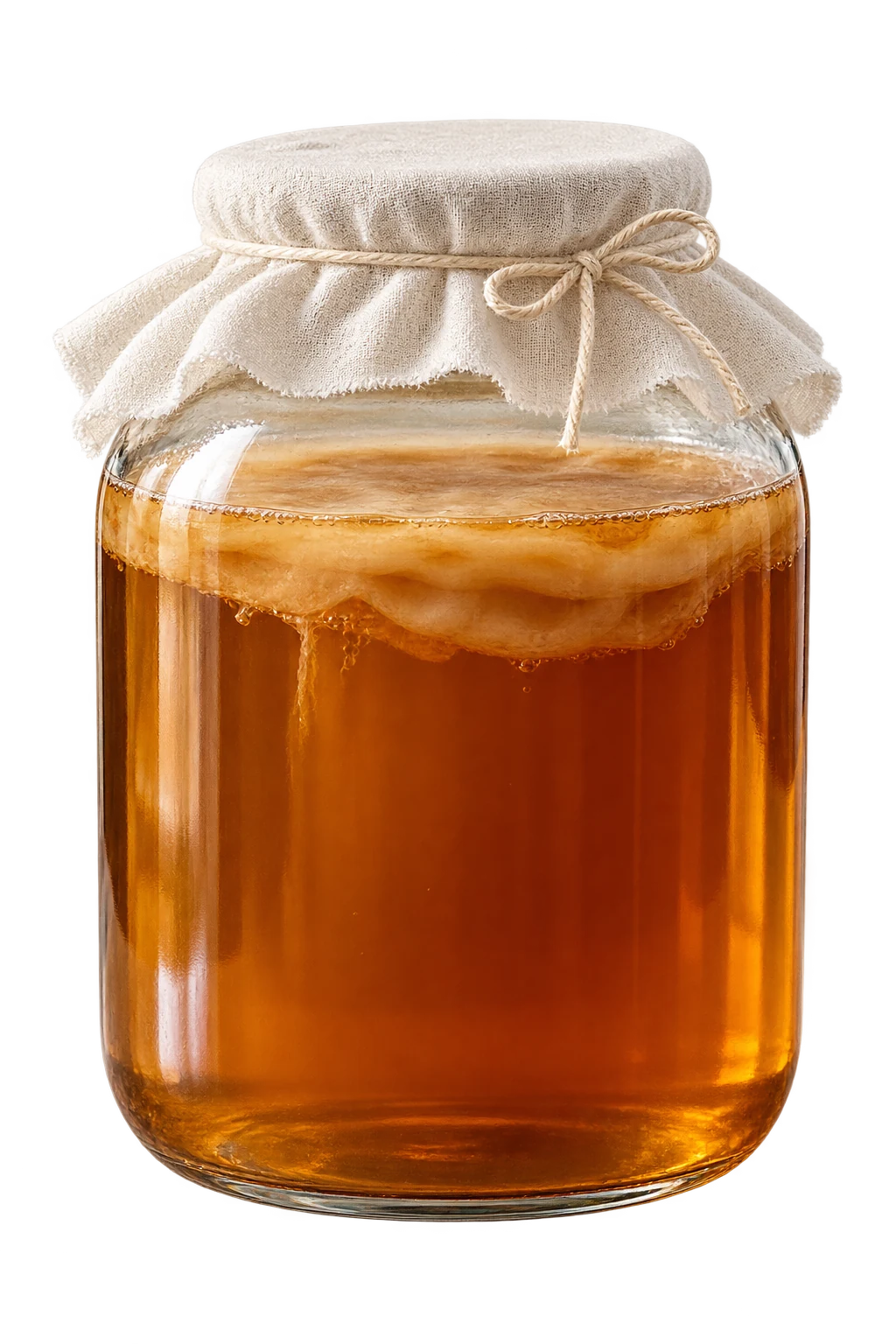
What is kombucha?
Kombucha is a drink made by fermenting sweetened tea with bacteria and yeasts. Sugar is their substrate: a material they use in their transformations. During the process, the amounts of sugars and organic acids change, along with the drink’s aroma profile.
What does SCOBY mean?
SCOBY stands for symbiotic culture of bacteria and yeast. The everyday name “tea mushroom” simplifies a much richer world. It does not describe a single species: the mix of microorganisms can differ between cultures and batches.
Why is every batch a little different?
The type of tea, ingredient proportions, temperature and fermentation time influence these transformations. Oxygen availability also matters, because acetic acid bacteria use it. Observing the drink is therefore most useful when paired with an understanding of the conditions in which it is made.
Kombucha fermentation can produce ethanol. The name of the drink alone does not mean that it is alcohol-free. Nor does every kombucha have the same composition, flavour or level of carbonation.
Tea as a starting point for learning
Kombucha raises many questions: how can we compare two batches, how can we describe an aroma, and what exactly are we measuring? These are subjects I want to develop at Fermentarnia. Starting with a fascination for bubbles, we move towards understanding the process, observing carefully and recording our experiments.