Bacteria and yeasts have different roles
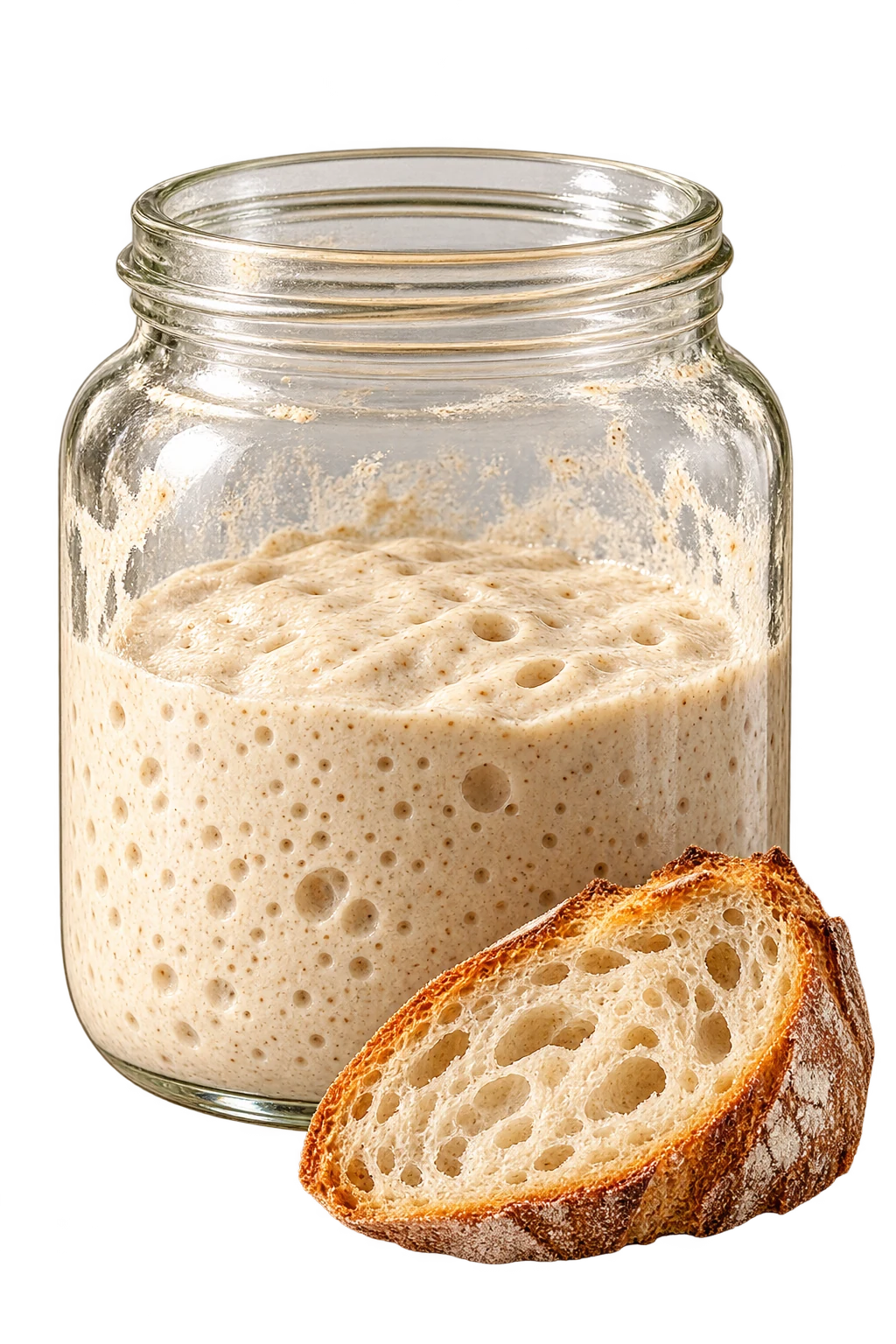
Lactic acid bacteria acidify their surroundings, while yeasts produce carbon dioxide, among other compounds, helping the dough rise. The composition of this community also influences aroma. Different starters can therefore smell and behave differently.
Flour contributes more than starch
Flour supplies nutrients and microorganisms. Studies of sourdoughs show links between the ingredients, microbial communities and fermentation products. Changing the flour can change how a culture behaves, so recording the flour type makes observations more useful.
Feeding changes the conditions
Fresh flour and water replenish nutrients. Temperature, water content and the interval between refreshments help shape the conditions in which microorganisms grow. Record these variables when comparing two cycles; elapsed time alone cannot describe the whole process.
What can observation reveal?
Rising volume, bubbles and changing aromas help you follow a starter’s activity. They do not reveal its precise microbial composition. Researchers identify that community using microbiological methods and DNA analysis; observations at home primarily help reveal recurring patterns.
Handle raw flour carefully
Do not taste raw starter: flour is not a ready-to-eat food. Use clean containers and utensils. Discard the entire starter if you see mold, and thoroughly clean the container before using it again.
Explore the sources
- Ercolini et al. (2013)
- Minervini et al. (2012): Italian sourdoughs
- Minervini et al. (2012): propagation conditions
- Landis et al. (2021)
- Colorado State University: starter safety
- Frontiers in Microbiology: flour microbiota (2016)
- Applied Microbiology: sourdough acids (1972)
- Frontiers in Microbiology: a year of refreshments (2018)